 Basque Country & Navarre Spain
Basque Country & Navarre in Spain is one of TRANSFORM's demonstration regions, coordinated by BC3
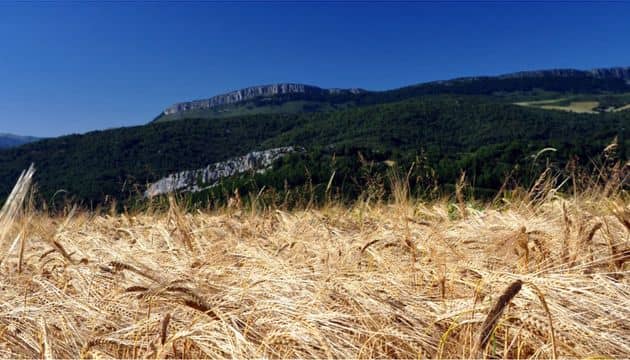
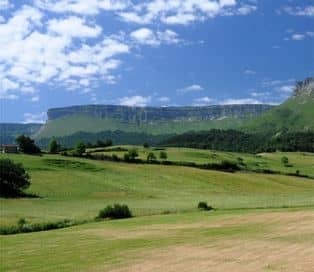
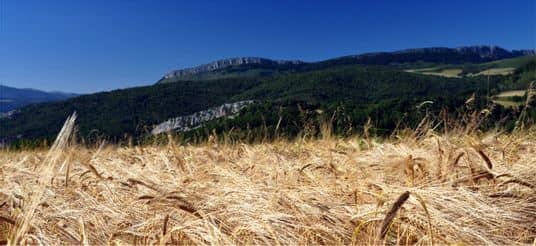
The Basque Country & Navarre cover 17,000 km² and are home to 2.9 million people. The utilised agricultural area (UAA) is close to 686,000 ha (>3% national UAA), 75% of it located in Navarre. 44% of the UAA is dedicated to herbaceous crops and 48% to permanent grasslands and woody crops.
The herbaceous crops are mainly cereals (nearly 75% of these areas), including wheat, barley, corn and oats. Irrigation is used on 30% of herbaceous crop areas, of which 50% are cereals (corn, wheat, barley), 27% vegetables (cauliflower, tomato, green pea), 14% forage crops (alfalfa, forage corn), 5% industrial crops (beet, rapeseed) and 2.5% tubers.
The Basque Country & Navarre offer a mosaic of landscapes where nature changes at every step, from the Cantabrian Sea to the mountains of the Pyrenees, across the Cantabrian chain and to arid plains. The central area of Navarre and the south of the Basque Country feature gentle hills and fertile lands, with vineyards and fields of crops. Livestock, including cattle, sheep, pigs and poultry, are raised on these lands.
Agriculture and climate change
Due to climate change, the Basque Country & Navarre are experiencing rising temperatures and decreasing rainfall, leading to consecutive drought events over the past 20 years. As a result, cereal yields in some areas have fallen up to 30% below average. Consequently, the demand for irrigation has increased by 36% over the same period.
Changes in temperature and precipitation
Climate change projections between 1991-2010 and 2041-2070 for this region*
| Season | Mean temperature | Precipitation |
| Winter | +1,34°C | +4,73mm |
| Spring | +1,05°C | -0,81mm |
| Summer | +1,58°C | -18,54mm |
| Autumn | +2,04°C | -30,83mm |
Adapting to new conditions
To adapt, the regions of the Basque Country & Navarre have implemented regional climate change strategies for 2050, supported by transition laws. These include water management through reservoirs and the Canal of Navarre and other sustainable agricultural practices such as crop rotation, agroecology, organic farming and precision farming.
Regional Leaders:

Aina CALAFAT ROGERS
Head of Policy Advocacy and International Projects
SEAE

Sébastien FOUDI
BC3
Research Fellow